Sunday Reset - Breathing in - March 29
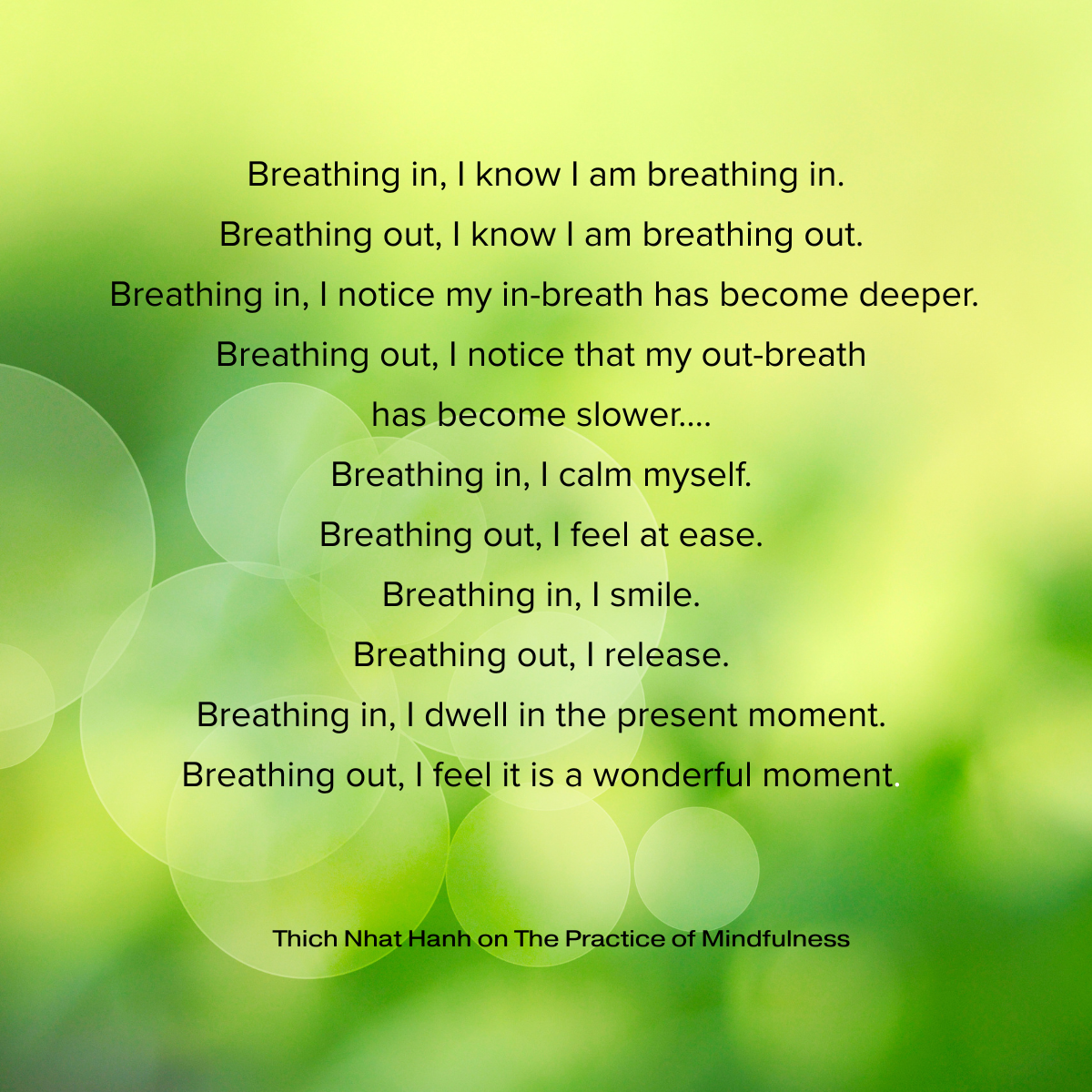
Breathing in - I know I am breathing in
Through the wide variety of meditation topics, awareness of the breath can be a portable, affordable, present moment source of rest and self-regulation.
When we pause and get curious and notice the breath, how does it feel? There may be a mental checklist that we run through as we focus on breathing. As we go through that mental checklist, we may also notice sensations in the body, emotions, or extra thoughts may come and go.
The experience may go something like this - let's give it a try:
Noticing sensations at the nose. We might feel a cooler inhalation and warmer exhalation. We may notice if we're breathing clearly and freely through both nostrils. We might also notice smells.
Pausing right now to notice breathing at the nose.
Noticing sensations in the throat. We may feel the breath traveling up and down the trachea. The throat may feel dry - or it may not. We may not feel any sensation. Get curious.
Pausing now to notice breathing in the throat.
Noticing sensations in the chest and abdomen. We may feel the rise and fall of the chest and possibly the belly. We may notice other sensations - does our breathing feel deep or shallow?
Pausing now to notice breathing in the chest and abdomen.
Can we keep trying and really lean into the sensations versus the mental checklist?
Pausing now and trying to feel sensations vs. going through a list.
Where do you really feel breathing? There's no right or wrong answer.
The mind might wander away, and we can notice that too. Knowing this is a normal part of meditation, then offering ourselves kindness and patience as we return our attention back to the breath.
The breath is always in the present moment, making it a helpful, built-in tool for meditation. When we rest with attention on the breath, we're not thinking about other things, including sources of stress (often rooted in the past or a projection to the future). Our attention to the breath typically brings a slower rhythm of breath which helps lower stress hormones and manage stress and anxiety.
Taking a big breath in and out, also serves as a method of regulation. That big breath stimulates the vagus nerve, sending a message to the brain that in this moment, we're safe. We begin to shift away from fight/flight/freeze and into a parasympathetic state of rest and digest.
Of course I'm curious to hear from you. How does your breathing meditation practice support you on a daily basis? Send me an email.
Warmly,
Julia
Below you'll find a variety of resources for your consideration.